ServicesFlat Roofing
Flat Roofing in Los Alamitos
Flat and low-slope roofs fail at the seams, the drains and anywhere water sits. We repair or replace them with the right membrane, fix the drainage, and pull the permit so the finished roof passes inspection. You get a clear plan before any work starts.
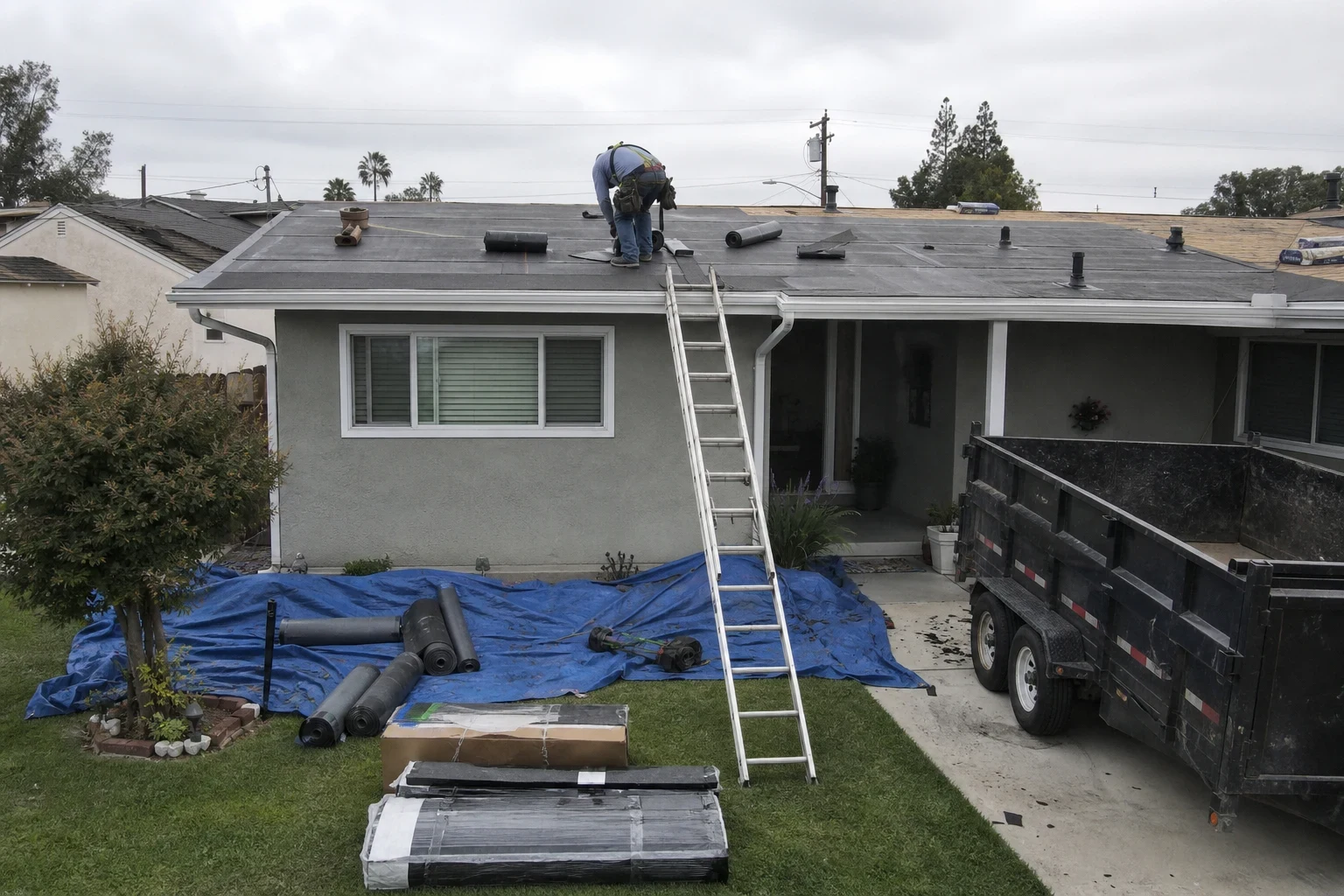
A Flat Roof Lives or Dies by Drainage
A flat roof is never truly flat. It needs a gentle pitch toward drains or scuppers so rain leaves the surface. When that pitch is lost, water ponds, the membrane softens and seams start to open. Most of the flat roof calls we take trace back to standing water.
We work on the low-slope parts of your home: full flat roofs, additions, porch and patio roofs, and the flat sections tucked between pitched ones. That includes older built-up roofs with gravel, modified bitumen, and single-ply membranes. We tell you honestly whether a repair will hold or whether the roof has reached the end.
Replacing a flat roof in California needs sign-off from the city building department. We handle the filing, build to the current residential code and walk the inspector through the job. You should never have to wonder whether your roof was done legally.
What Our Flat Roofing Work Includes
- Drainage check first
- We look for ponding marks, clogged scuppers and sagging spots before we talk materials. If the slope is wrong, tapered insulation or crickets can move water where it belongs.
- The right membrane for your roof
- Modified bitumen, single-ply membrane or a coating over a sound roof each fit different situations. We explain how each behaves in sun and winter rain and recommend one, with the reasons in writing.
- Tear-off and deck repair
- California code limits how many roof layers you can stack. Where a tear-off is needed, we remove the old roof, replace soft or rotted decking, and show you photos of what we found.
- Edges, curbs and penetrations
- Leaks often start where the membrane meets a wall, a vent, a skylight or an AC stand. We flash and seal each of these details instead of trusting caulk to do the job.
- City filing and final inspection
- We file the reroof permit, schedule the inspection and meet the inspector. When it passes, you keep the signed card for your records.
Signs Your Flat Roof Needs Attention
Water still sitting two days later
A little water after rain is normal. Puddles that last more than 48 hours mean the roof is not draining, and the membrane under them is aging fast.
Blisters and bubbles
Raised pockets mean moisture or air is trapped between layers. Left alone, they crack and let water in.
Seams lifting at the edges
Open laps along the perimeter or around vents are an easy path for wind-driven rain.
Stains on ceilings below
Water on a flat roof can travel before it drips, so a stain is often several feet from the actual opening. Our roof leak repair work starts by tracing it.
Bare spots in the gravel
On a built-up roof, gravel shields the asphalt from the sun. Where it has washed away, the surface dries out and cracks.
What Moves the Price of a Flat Roof
Every flat roof is priced from what we find on it. We put the cost drivers in writing so nothing on the final bill catches you off guard. Financing is available through Service Finance Company, subject to credit approval.
Size and access
Square footage sets material and labor. A roof reached easily from the driveway costs less to work on than one behind a second story.
Layers coming off
One old layer is a quicker tear-off than two or three. Gravel roofs take extra time to strip and haul away.
Condition of the deck
Wet or rotted sheathing has to be replaced before anything new goes down. We price it after we see it and show you the photos.
Drainage corrections
Adding tapered insulation, crickets or new scuppers adds cost, but it is often what stops the roof from ponding again.
Membrane choice and city fees
Material systems differ in cost and lifespan. City fees and any code-required upgrades are listed on your estimate.
How a Flat Roof Job Runs
- 1
Free inspection
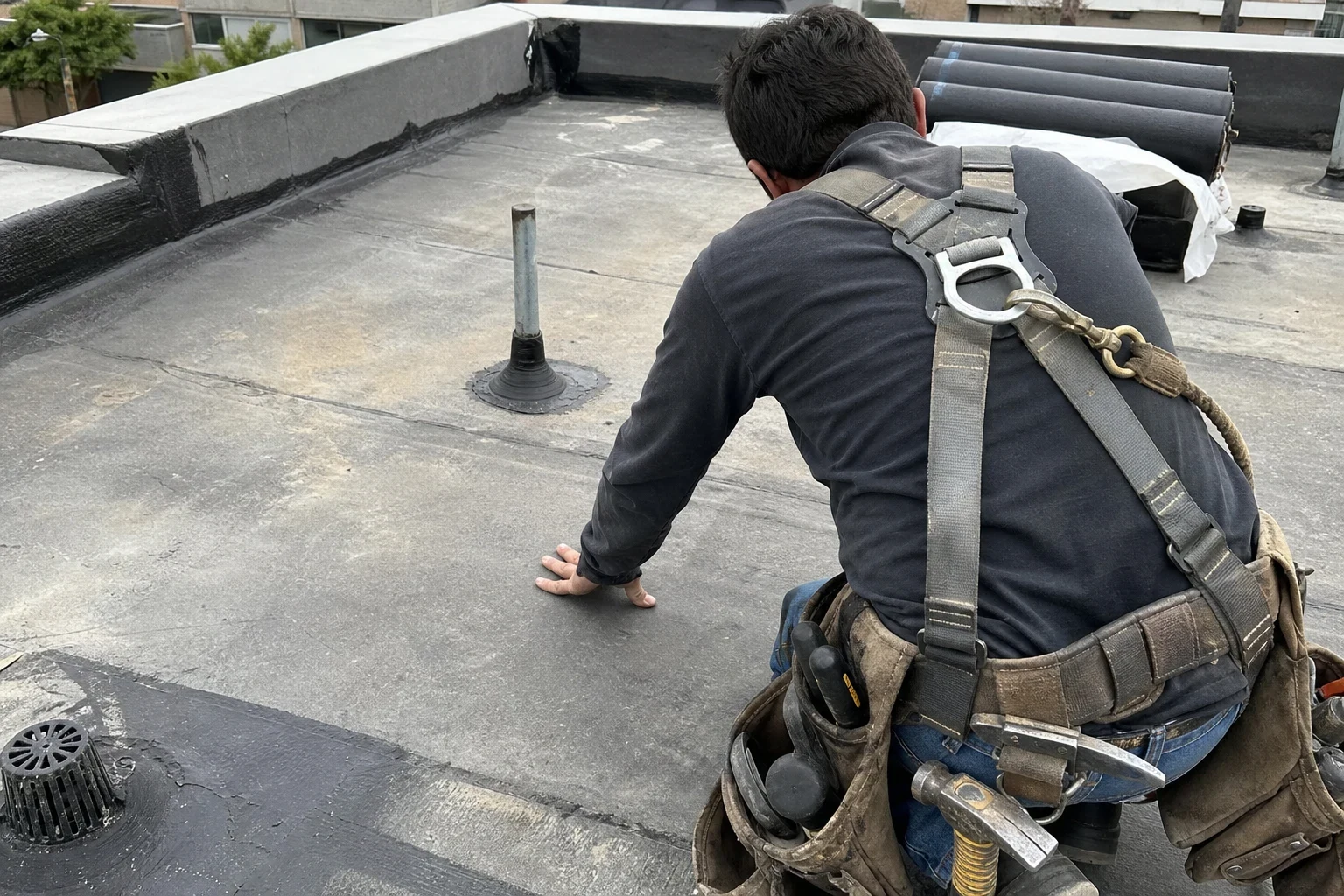
We get on the roof, check drainage, seams and decking, and take photos. You see what we see.
- 2
Written estimate and code notes
Your free written estimate lists the work line by line. We explain what the city filing covers, whether any energy rules apply to the new surface and what the inspector will look at.
- 3
Filing and scheduling
We file with the city and set a work date. Before the crew arrives, we tell you where materials will go and how long the job should take.
- 4
Installation and cleanup
We protect the areas around your home, remove old material, repair the deck and install the new system with the details sealed. Debris is hauled off and the yard is swept for nails.
- 5
Inspection and handoff
We meet the inspector, get the sign-off and give you the paperwork along with simple care tips, like keeping drains clear before the rainy months.
Flat Roofing Questions We Hear Often
Do I really need a permit to replace my flat roof?
Yes. In California, replacing a roof covering needs city approval, and that includes flat and low-slope roofs. We file the paperwork and handle the inspection. Roof work done without approval can cause trouble when you sell or file an insurance claim.
Can you just coat my old flat roof?
Sometimes. A coating can extend the life of a membrane that is still well attached and dry underneath. If we find wet insulation, soft decking or widespread blistering, a coating would only hide the problem, and we will tell you so.
Why does water keep pooling on my roof?
Usually the slope has settled, a drain is blocked, or the roof was built too flat in the first place. Current code calls for positive drainage on new low-slope roofs. We correct the pitch during replacement so water moves off.
Who will I be working with?
We are a licensed roofing contractor, CSLB 1092407 (C-39), and we handle the job from inspection to final sign-off. We offer service in English and Spanish.
Will you help if insurance is involved?
We work directly with your insurance claim. We document the damage with photos and explain the scope to the adjuster. The coverage decision stays between you and your insurer.
Get a Clear Answer on Your Flat Roof
We will check the drainage, the seams and the deck, then explain your options and the code steps in plain words. Homeowners in Los Alamitos, Rossmoor, Seal Beach and Cypress can start with one phone call.