ServicesRoof Repair
Roof Repair in Los Alamitos, Done to Code the First Time
A cracked tile, a lifted shingle or a stain on the ceiling doesn't always mean you need a new roof. We find what actually failed, fix it with materials that match, and tell you plainly whether your repair needs a permit before any work begins.
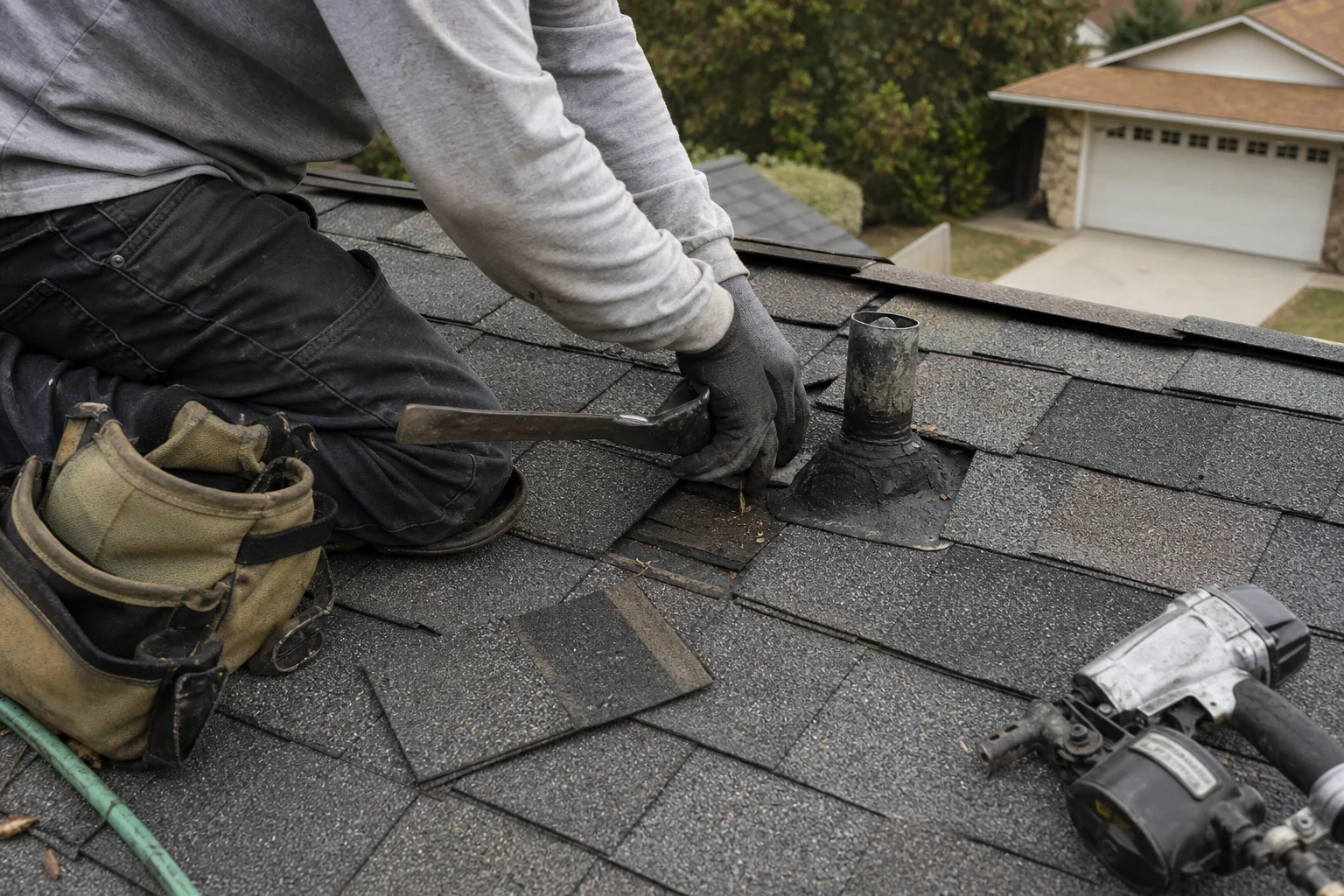
When a repair is the right call
Most roofs that leak or lose a few shingles still have good years left. If the decking is sound and the damage stays in one area, a careful repair costs far less than roof replacement and buys real time. We look over the whole roof and the attic first, so the fix matches the real problem and not just the spot you can see from the driveway.
A repair still has to meet code. The underlayment, flashing and fasteners we put back follow the same California rules as new work, and a larger repair can cross into work the city wants to review and inspect. We tell you which side of that line your job falls on, and why, before you agree to anything. We work as a licensed roofing contractor under CSLB 1092407 (C-39), so when city sign-off is needed, the paperwork is filed under our license, not yours.
If the damage is widespread, we'll say so. A patch that won't hold through the next rainy season isn't a bargain.
What our roof repair work covers
- Tile and shingle replacement
- We replace cracked, slipped or missing pieces and match the profile and color as closely as current stock allows. On tile roofs we check the underlayment underneath, since it usually wears out long before the tile does.
- Flashing at walls, chimneys and vents
- Many of the leaks we trace start at the metal, not the open field of the roof. We reseal or replace step flashing, counterflashing and pipe boots instead of smearing roof cement over the gap and hoping.
- Decking and underlayment spot repair
- Where water has soaked through, we open the area, replace soft sheathing and lay new underlayment before closing it up. Your repair should never sit on top of rot.
- Ridge, hip and attic vent work
- Loose ridge caps, cracked hip mortar and damaged vents get reset and fastened properly. That matters for wind resistance and for how well your attic breathes.
- Products we know well
- On shingle roofs we use materials we know well and install them the way the manufacturer intends, which helps a repaired section blend in and perform like the rest of the roof.
Clues that part of your roof has given out
A brown ring overhead
A faint tea-colored mark on drywall tells you water has already made it past the roof. Catching it early keeps a small fix from turning into a soggy ceiling once winter rain arrives.
Cracked or slipped tiles
Tiles break with age or when someone walks on them for solar, satellite or antenna work. A gap lets sun and rain reach the underlayment that actually keeps water out.
Lifted or missing shingles
Strong dry winds can break a shingle's seal strip, and once one edge lifts, the next gust takes more.
Granules piling up in the gutters
A sprinkle is normal. Heaps of gritty granules mean the shingles are wearing thin in places.
Rusted or loose flashing
Metal that has pulled away from a wall or chimney, or shows rust holes, is an open door for water.
Damp spots or daylight in the attic
Wet insulation, dark stains on rafters or pinpoints of light through the roof deck tell us exactly where to start looking.
How a repair visit goes
- 1
Your call and a free inspection
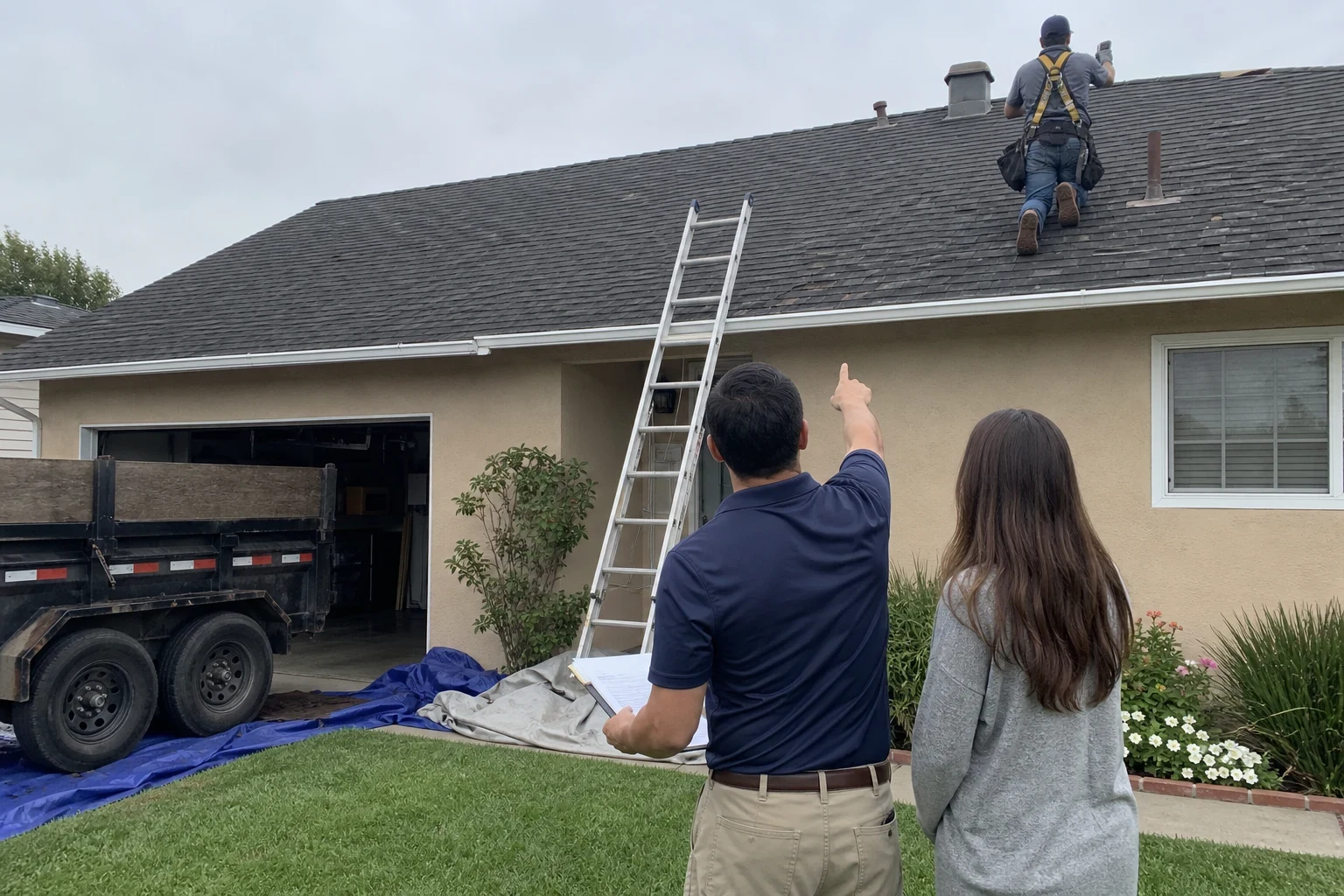
Describe what you're seeing and we'll pick a time to visit. We check the roof and, if we can get to it, the attic, photographing all we find. Se habla español, so we can do the visit in English or Spanish.
- 2
An estimate that answers the code question
Your free written estimate lists every repair and its materials, and says whether the city has to approve the work. If insurance could be involved, we explain how we work directly with your claim.
- 3
The day of the repair
We protect plants and walkways, open up only what we have to and rebuild the damaged layers starting at the deck. Small repairs are often done in one visit.
- 4
Inspection, cleanup and final photos
If the city has to inspect, we book it and meet the inspector at your home. Before leaving, we run a magnet over the yard for loose nails and show you photos of the completed repair.
What sets the price of a repair
A repair's price depends on what turns up during a close look, so we inspect first and quote second. Each item is listed on your written estimate so you can follow the cost. Financing is available through Service Finance Company, subject to credit approval.
- The roofing on your home
- Tile needs careful handling, and finding an older or discontinued profile can mean extra searching. Shingles are usually easier to match and put on.
- Damage below the roofing
- Soft decking or worn-out underlayment means more labor and material. We show you photos so you know why it's on the estimate.
- Roof size, slope and reach
- Steep slopes and second stories take more safety setup and more time than a low, one-story roof.
- Permits and code work
- A repair big enough for a permit brings fees and an inspection. Code may also call for newer flashing or underlayment where we work.
Common roof repair questions
Something not covered here? (562) 379-3378
Will my repair need a permit?
That depends on how much work there is. Replacing a handful of tiles or one pipe boot usually doesn't need one, but redoing a bigger section often does, and the city building department decides. We look up the current rules and write the answer on your estimate.
Will the new pieces match my roof?
Most of the time we come very close. Older tile profiles and discontinued shingle colors can be tough to find, and if an exact match isn't possible, we tell you before work starts and go over your choices.
How do you choose between fixing and replacing?
We weigh the roof's age, how much of it is damaged and the shape of the decking and underlayment. If a repair will last, that's what we recommend. If the trouble is all over the roof, we show you the photos and explain why a new roof is the better choice.
Does insurance cover roof repairs?
It depends on what caused the damage and what your policy says. Sudden damage from wind or a falling branch is often covered, while age-related wear usually isn't. We work directly with your insurance claim and record what we find, but your adjuster makes the coverage decision.
Should I stay home while you work?
Usually there's no need, since we work outside. We do want to go over the findings with you before starting, and attic access helps when the leak shows up inside.
Let's find out what your roof needs
We'll inspect it, photograph what we find and tell you whether a repair will do the job and whether the city needs to be involved.